Fulton Innovation’s Wireless Charging


Fulton Innovation logoThe great thing about CES is that every now and then an unknown shows off something cool. I’d never heard of Fulton Innovation but they have smart products based around wireless power transmission. Todd learns more about eCoupled from Dave Baarman.

Fulton Innovation have developed an inductive coupling solution that scales from simply making a magazine cover light up as you walk past to being able to charge a whole bag of devices without taking them out of the bag. Electric cars could be recharged by parking in the right spot and not by plugging them in.

Not all of these products are ready for market just yet, but inductive charging efficiencies are on a par with plug-in chargers though economies of scale are needed to bring the prices down to a point where it’s built-in as standard. Palm’s Pre range of smartphones used inductive charging with the Touchstone and the Motorola Droid 4 has inductive charging as an option. As a Pre 3 owner, it’s brilliant not having to fiddle with cables and I hope more devices come to the market with inductive charging in 2012.

Interview by Todd Cochrane of Geek News Central for the TechPodcast Network, and Dave Lee from Waves of Tech.

[cessponsor]


Rocstor AES 256-bit Enctypted Hard Drive


Rocstor has unveiled a new portable external hard drive that practically guarantees that your data won’t be stolen. The hard drive, which comes in capacities up to 1 TB, has a slot for a smart card. Enter the card, punch in your code (which you choose), and you unlock the drive and all of the data you have stored on it. The drives are FIP certified and ship with multiple cards. For users that need additional cards, they can be purchased blank and inserted into a unit to be programmed to work with it. PIN Numbers can be changed an unlimited number of times as well.

These hard drives are probably not for average consumers, but more for business and government. They are designed to protect highly-sensitive data and eliminate those stories that are always in the news these days about stolen laptops filled with account and credit card information. The drives retail in the $400-600 range and are available now from Rocstor.

Interview by Todd Cochrane of Geek News Central for the TechPodcast Network.

[cessponsor]


Skifta by Qualcomm


Skifta Qualcomm which is known for its silicon and wi-fi technology for handsets and tablets is spreading into software and service. One of the consumer products they are currently developing is called Skifta. It is a media shifting platform which works through DLNA-certified and UPnP -compatible devices. DLNA protocol has been around for about eight years. Most TVs today which are over 36 inches and Internet enable are DLNA capable. The Web site of your TV’s manufacture should let you know if your TV is DLNA capable. DLNA is a nonprofit trade organization which enables the sharing of digital media between various consumer devices by defining interoperability guidelines. Because DLNA is a nonprofit organization they don’t have the money to spend on advertising and promotion, so its adoption has been slow but steady. The growth of the Smart or Connected TV market has help to increase its popularity over the last 12-18 months. Its biggest rival is Apple’s Air Play.

Qualcomm was showing off its software platform Skifta at CES 2012, which works with the DLNA platform. Think of Skifta as Airplay for Android. Once Skifta is installed on your Android device, it will go out and find any DLNA enabled device including TV’s, computers and the Playstation. You can then sending any media that is available on your network to that device. Skifta also gives you access to various Internet providers including Revision3, Ted Talks, Facebook and others.

Qualcomm is also developing a Skifta audio adapter which you attach to a receiver that is not DLNA enable and enable it. They are also making a DLNA platform that can be installed easily by the manufacture into a receiver. I installed the Skifta application on my Android phone and it almost immediately connected and found the media on my network. Once I set up an account it also let me pick up media from Revision3 and Ted Talks among others. Unfortunately I don’t have a connected TV, so for me its use is limited, but I love its possibilities.

Interview by Todd Cochrane of Geek News Central and Steve Lee Wave of Tech

[cessponsor]


Yale Locks Brings High Tech to the Common Door


Yale has new home door locks that bring a high-tech flare to your house. These aren’t your average doorsets – they have touch-screens and smartphone apps. You can buy the locks alone from many retailers, like Amazon, however, they are big with custom installers of home security systems. Now they have introduced NFC (near field communication) to their locks. That means you don’t need a key or a code. Your phone alone can unlock the door just by being close to it. If you are worried about your phone being lost or stolen then you can set up a secondary line of security such as a pass code. You can also revoke a mobile key via the web site if a phone gets lost. In addition, you can assign a separate code to each person in your home and even have the lock send you a text when someone passes through the door. Yale Locks are available on the market today, and the ones with NFC technology will be arriving soon. Prices and availability have not yet been determined.

You can find out more at Yale. Interview by Todd Cochrane of Geek News Central for the TechPodcast Network.

[cessponsor]


Vertix Wireless Helmet Communication


Wireless communication has been around for several years in the sport of professional bicycle racing. Team managers use it communicate back and forth with their riders during races. Vertix has it’s own wireless communication solution, but this one is added into motorcycle helmets.

The Vertix hardware comes in a couple of different styles so that it can be used with both full-face and open-face helmets. Both the speaker and microphone can be easily mounted to almost any helmet. In fact, they claim an installation time of only minutes. The buttons can easily be tapped while riding to allow communication with other riders in your group or access to a cell phone. The units can paired with a group of up the three riders, and of course between rider and passenger as well. The published range for communication is 500 meters, but Vertix claims it can sometimes reach up to 1 km. One final feature, a handlebar-mounted remote control will be coming out soon. The MSRP is $160 and you can find out more at the Vertix site.

Interview by Todd Cochrane of Geek News Central & Steve Lee of WavesofTech.com for the TechPodcast Network

[cessponsor]


Magellan GPS units made for Geocaching


Andy (Head Hard Hat) Smith from Geocaching World talks to Eric Waters of Magellan GPS about their new line of hand-held GPS units made with the Geocaching Hobbyist in mind.

The Magellan eXplorist line of GPS units. Instead of having to type in a waypoint, the explorist units have a number of geocaches in the unit already. The Explorist 610 even has Turn by turn directions up to the nearest road and then walking point-to-point directions for the hike to the cache. Some models even have a camera so you can take a picture of the waypoint instead of typing it in manually.

More information can be found at magellangps.com


SoftKinetic Gesture Recognition Platform


SoftKinetic CameraMicrosoft can rightly claim to have brought gesture recognition to the consumer market through Kinect for Xbox in 2010, but SoftKinetic has been in the business since 2007, providing hardware and software solutions for the consumer electronics and professional markets. Andy and Courtney find out more from Virgile Delporte.

SoftKinetic are team of mathematicians, 3D imaging specialists, software engineers and game designers that have developed both hardware and software components of an end-to-end solution that can be incorporated into new products. The 3D middleware platform, iisu, lets content and video game developers, arcade and fitness equipment manufacturers develop their next interactive product or solution without needing a deep understanding of how the technology behind gesture recognition actually works.

If you want to have a play, SoftKinetic’s DepthSense Professional Kit, which includes a camera, is available from their store for just $499.

Interview by Andy McCaskey and Courtney Wallin of SDR News and RV News Net.


Green Plug Brings Control to AC-DC Conversion


Green Plug LogoAs energy prices rise and green credentials come under scrutiny, each step in the energy path is being examined for inefficiency. Andy and Courtney listen to Paul Panepinto from Green Plug on their technology.
Green Plug have developed a digital controller to optimize the conversion of electricity between AC and DC. For the non-engineers, AC (alternative current) is what is in your wall socket and DC (direct current) is what most of your gadgets use. All those power bricks and wall warts are transformers combined with AC to DC converters to change 110 V AC to 12V / 5V DC.

Green Plug has pioneered the use of intercommunicating digital power and load processors to optimize the AC-to-DC power conversion and increase efficiency. It’s an area that has been typically overlooked in power management but Green Plug has reduced the implementation cost to make the inclusion of the technology cost-effective. Over the next few years, it’s likely that this technology will start to appear laptop and phone chargers, so keep an eye out for it.

Interview by Andy McCaskey and Courtney Wallin of SDR News and RV News Net.


Leonar3Do Virtual Reality Kit


Leonar3Do 3D Controller

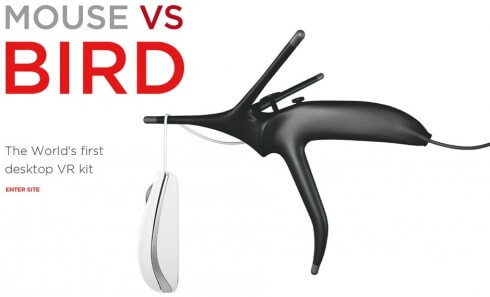
This looks more like an instrument of torture than any kind of bird I’ve seen but fortunately it’s not and it’s actually the virtual reality controller from Leonar3Do‘s desktop VR kit. Andy and Courtney breathe a sigh of relief and chat to Stewart Oldroyd from Leonar3Do.

Hungarian start-up have created “the world’s first desktop VR kit”, consisting of the scary controller above, 3D glasses and three line sensors that affix to the computer monitor to track the position of the controller and the glasses. There’s a video on the company’s website that shows the system in action and it looks amazing.

The innovative part is that it’s an out-of-the-box environment which costs around $1500 rather the $10,000+ usually associated with VR systems. Currently only available for enterprise and education markets, the consumer version will arrive in late spring.

Interview by Andy McCaskey and Courtney Wallin of SDR News and RV News Net.


Vitallink Keeping the Elderly Connected


VitallinkDid you know that there are 78 million baby boomers in the US and over 1 billion world wide. That the fastest growing age group are adults over the age of 85. Many of these adults are separated from their children and grandchildren and live alone often in isolation. A coalition called AgeTek was created to try to solve this problem. One of the members of this coalition is Vitallink.

Vitallink is a system that is installed on the older persons computer and it allows them to use applications such as Skype, or check the weather or answer email with a touch of a button. To answer email the elderly person can either type the answer as you would normally, or they can speak the reply. The use of video applications such as Skype are important because they allow the caregiver or relative to see their parent or grandparent. Seeing someone can tell you a lot more about their condition then a simple call. Elderly people are often reluctant to bother their off-spring because they don’t want to be a burden. Besides which would be better having grandma read a story over the phone to her grandchild or having grandma read the story through video chat, where the child can see and interact with their grandma. I know which method I would choose. The subscription for Vitallink is only $5.00 a month.

The two hardest groups to sell the product to is the elderly adult who are often computer phobic and the person who does the purchasing for the big box company who often are young and don’t recognize the elderly as an important market. Once the elderly adult uses the Vitallink technology for just a short time they are almost always sold on it. Unfortunately it takes a lot more time and effort to try to convince the young sales person of its necessity.

Interview by Andy McCaskey of SDR News and Dave Lee from Waves of Tech